

ГО "Завзяті" системно займаються промоцією творчості створеної військовими митцями ЗСУ


"No Icon" — Painting on Artifacts of War.

This exhibition presents the artistic practice of Ukrainian artist and serviceman Serhii Herasymenko, whose work is created directly within the conditions of war.
Using materials that originate from the military environment, he combines painting with the physical reality of conflict, transforming artifacts of war into artistic objects.
Within the SPILNO laboratory in Hamburg, these works become a point of departure for international co-creation and cultural dialogue. The exhibition explores how artistic practices emerging during military service can enter new contexts, generate new interpretations, and contribute to contemporary European cultural discourse.
Проєкт "Траекторія інтеграції: піксельна творчість"
реалізується в межах проєкту ZMINA:Resilience, за підтримки фонду IZOLYATSIA (Україна), організації Malý Berlín (Словаччина) та за участі мережі Trans Europe Halles (Швеція) і співфінансується Програмою Європейського Союзу «Креативна Європа».
Співфінансовано Європейським Союзом. Погляди та думки, висловлені у цьому матеріалі, належать виключно автору(ам) і не обов’язково відображають позицію Європейського Союзу чи Виконавчої агенції з питань освіти і культури (EACEA). Ані Європейський Союз, ані орган, що надає грант, не несуть відповідальності за них.
Trajectory of integration:
pixel creativity
PROPOSAL SPILNO

.png)


Зверніть увагу

The co-creation laboratory is implemented within the framework of the project “Trajectory of Integration: Pixel Creativity” — an initiative aimed at integrating the creative work of Ukrainian military artists into the European cultural space.
The project works with artistic practices that emerge directly within the conditions of military service and approaches them as part of the contemporary cultural process. It combines documentation, exhibition activities, and international partnership programmes, creating a platform for long-term collaboration between Ukrainian artists and cultural institutions across Europe.
Within the SPILNO co-creation format, the laboratory provides a space for dialogue, artistic exchange, and the development of new cultural products through collaboration between Ukrainian military artists and their European counterparts.
Selected Works by Serhii Herasymenko


non-discrimination
intercultural dialogue
non-discrimination
social cohesion
civic dialogue
community empowerment
We invite you to collaborate.

Serhii Herasymenko is a Ukrainian artist and serviceman of the Armed Forces of Ukraine.
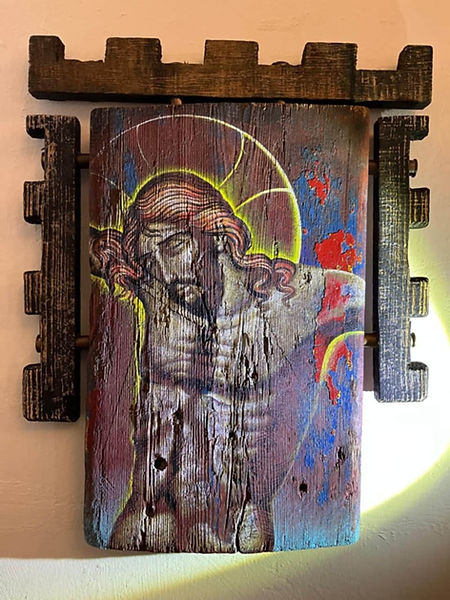
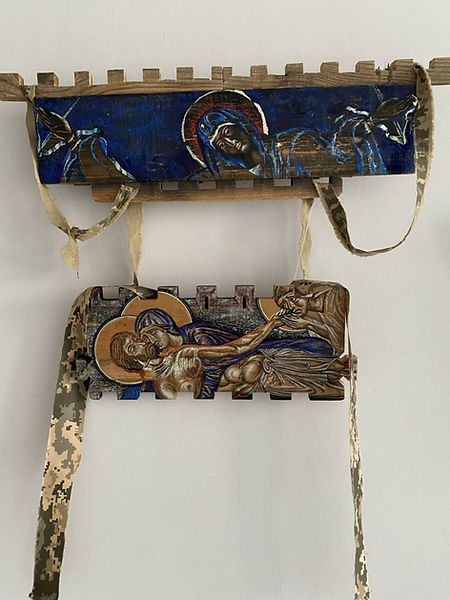
His practice operates at the intersection of painting, iconography, and object-based art. He works with fragments of wood, ammunition crates, debris, and other materials that bear the physical traces of war.
Many of his works take the form of contemporary “military icons,” where the visual language of sacred imagery is combined with the material reality of lived wartime experience. Through this approach, everyday military objects are transformed into artistic statements that explore memory, resilience, and the relationship between tradition and contemporary reality.
The exhibition explores the transformation of material — from a functional object into a carrier of imagery and meaning.
Rather than documenting events, the works engage with material itself as a witness. Traces of use, damage, and time become part of the visual language, shaping a dialogue between the object and the image.
Key themes include:
-
memory
-
presence
-
transformation
-
the interaction between destruction and representation

Visual Art Created by an Artist Serving in the Armed Forces of Ukraine

The exhibition consists of:
-
paintings created on artifacts of war
-
object-based works
-
accompanying texts (short descriptions and contextual notes)
Possible exhibition formats:
-
linear exhibition layout
-
thematic sections
-
intimate or expanded version, depending on the space
Flexible exhibition format:
-
15–20 works — intimate exhibition format
-
25–40 works — full-scale exhibition
The exhibition can be adapted to:
-
galleries
-
museum spaces
-
alternative cultural venues
Serhii Herasymenko
Serhii Herasymenko is a Ukrainian artist and serviceman of the Armed Forces of Ukraine.
His practice operates at the intersection of painting, iconography, and object-based art. Working with materials drawn from the military environment—fragments of wood, debris, boards, and other artifacts directly connected to war—he combines the tradition of sacred art with contemporary experience, creating images charged with symbolic meaning.
Many of his works take the form of “military icons” — images painted on materials that have witnessed war. Each object carries its own history, and the act of painting does not erase it but enters into dialogue with it.
The artist’s practice is shaped directly within the conditions of military service. In this context, material functions not only as a surface for representation but also as a carrier of experience, transforming remnants of destruction into elements of cultural expression. As researchers have noted, his works transform “artifacts of battle into artifacts of culture.”
Within the framework of the project Trajectory of Integration: Pixel Creativity, Serhii Herasymenko is presented as an artist whose practice emerges directly from the conditions of war and engages with materiality as both witness and bearer of memory.




Інші пропозиції проєкту Траекторія інтеграції


Місце для проекту, який ми створимо разом

Фотовиставка робіт трьох фотохудожників на основі польового дослідження на тему взаємодії військових та тварин
Виставка
живопису на артефактах війни
Фотовиставка татуювань військових ЗСУ
Презентація календаря та ліногравюр

Саме цим роком датують один із ранніх відомих образів Козак Мамай — фігури, що поєднує в собі воїна і митця.
У цій іконографії козак зображений у стані спокою, з кобзою поруч, тоді як зброя залишається невід’ємною частиною його присутності. Ця подвійність формує одну з ключових моделей української культурної ідентичності — здатність до дії та одночасно до осмислення досвіду через творчість.
Образ Мамая не є портретом конкретної особи, а радше узагальненою фігурою, що втілює спосіб мислення. Його візуальна мова поєднує статичність і внутрішню напругу, відображаючи стан рівноваги між війною і культурою. Саме ця логіка — не протиставлення, а співіснування — лежить в основі сучасних художніх практик, сформованих у військовому середовищі.
Сьогодні творчість військовослужбовців Збройних Сил України продовжує цю традицію. Художники, фотографи, музиканти та автори міждисциплінарних практик не припиняють творити в умовах служби, зберігаючи авторство як форму присутності. Їхня практика виникає не після досвіду війни, а безпосередньо в ньому, фіксуючи фрагменти реальності та перетворюючи їх на цілісні художні висловлювання.
У цьому контексті проєкт «Траєкторія інтеграції: Піксельна творчість» розглядає сучасних військових митців як носіїв тяглої культурної традиції, де творчість не є альтернативою війні, а способом її осмислення. Піксель як базовий елемент візуальної мови проєкту виступає метафорою фрагмента досвіду, що складається у цілісне бачення — подібно до того, як у народному образі Мамая поєднуються дія, пам’ять і культура.

З глибокої давнини і до сьогодні український воїн продовжує творчість
